


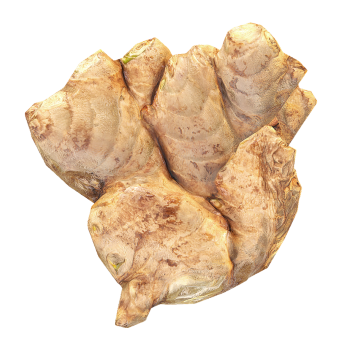
ginger
Zingiber officinale Roscoe is a perennial herbaceous plant of the ginger genus in the ginger family. A rhizome with yellow green flowers and a stimulating fragrance. Plant height 0.5-1 meter; The rhizome is thick, branched, and has a fragrant and spicy taste. Leaves lanceolate or linear lanceolate, hairless, sessile; Tongue membrane texture. The total stem length is 25 centimeters; Spike shaped inflorescence with cones; Bracts ovate, light green or pale yellow at the edges, with a small pointed tip at the top. Calyx tube is about 1 centimeter long; Corolla yellow green, lobes lanceolate; The central lobe of the lip is oblong ovate.

Multi flowered Penglai Ge fruit
Gardneria multiflora Makino is a plant species in the family Malvaceae, belonging to the Penglai Ge genus. It is an evergreen climbing vine. Branches cylindrical, with obvious leaf scars, hairless. Chanpingbian, Menghai, Lancang, Fengqing, Funing, Xichou, Malipo, Guangnan and other places; Born in mountainous forests at an altitude of 500-2100 meters.

Daisy
Daisy (Bellis perennis L.) is a perennial or annual herbaceous plant in the Asteraceae family, characterized by a stalk like appearance. Its height is about 10 centimeters, and its leaves are spoon shaped. The top is round, and the upper part has sparse dull or wavy teeth; The total flower bud is hemispherical or broadly bell shaped, with a layer of tongue shaped flowers and more tubular flowers; The achene is oblong, flat, with veins but no crest. The flowering period is from March to June. The name daisy is related to its morphology, as its flower shape is smaller than that of ordinary chrysanthemums, resembling an immature chrysanthemum, hence the name daisy.

Clerodendrum canescens
Clerodendrum canescens Wall. is a shrub plant of the genus Clerodendrum in the family Lamiaceae. Gray haired young branches with slightly four edges, densely covered with long soft hairs; Leaves heart-shaped or broadly ovate, base heart-shaped or nearly truncated; The inflorescence is densely clustered into a head shape, with bracts ovate or elliptical, lobes ovate or broadly ovate, corolla white or light red, crown tube deep blue to black, red centimeter, lobes inverted ovate, long circular, and covered with calyx; The drupe is nearly spherical in shape; The flowering and fruiting period is from April to October. Grey haired Daqing has the effects of nourishing yin and clearing heat, promoting lung function and eliminating phlegm, dispelling wind and relieving pain, cooling blood and stopping bleeding in traditional Chinese medicine. It is mainly used for treating colds and high fever.

Cat's eye grass
Chrysosplenium grayanum, a traditional Chinese medicine name. The whole plant of Euphorbia escula L. [Euphorbia lunulata Bunge], a plant belonging to the family Euphorbia and genus Euphorbia. The plant cat eye grass is distributed in Northeast China, Inner Mongolia, Hebei, Shaanxi, Shandong, Jiangsu and other places. It has the effects of relieving cough, eliminating phlegm, dispersing nodules, dispelling water, removing toxins, and killing insects. Indications include phlegm retention, cough and wheezing, edema, scrofula, scabies, and unnamed swelling and toxin.

turmeric
Curcuma longa L. is a plant in the ginger family, belonging to the genus Curcuma. Its rhizomes are well-developed, clustered, and have many branches, forming an elliptical or cylindrical shape; Leaves are oblong or elliptical in shape; The stem is extracted from the top leaf sheath; The spike shaped inflorescence is cylindrical in shape; The bracts are oval or oblong in shape, with a light green color; The corolla is light yellow, and the ginger yellow flower period is in August. The medicinal name of "turmeric" was first recorded in the "Newly Revised Materia Medica", referring to various plants in this genus. It was later identified as this species in the Qing Dynasty and evolved into the mainstream variety of "turmeric".
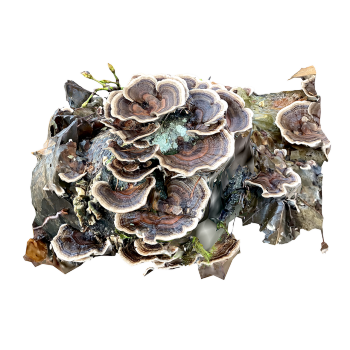
Yunzhi
Yunzhi is one of the most medicinal fungi, with functions such as clearing heat, detoxifying, anti-inflammatory, anti-cancer, and hepatoprotective. Yunzhi, also known as "turkey tail", has very recognizable features. It may be a forest fungus named after a bird, named after local features rather than the whole. The fruiting body of the colored velvet cap fungus is one year old. Leafy to semi fibrous, lateral without stems, often covered in tile like folds, often connected to the left and right, the fruiting bodies that grow on the cross-section of the stump or fallen wood often enclose in a lotus seat shape.

Cow's Eye Horse Money Fruit
Niuyan Maqian is a vine plant of the Maqian Koma genus. Small branches have hooks and opposite leaves, while old branches have thorns; The leaves are round, oval, or elliptical in shape, with a rounded or broadly wedge-shaped base and a sparse shallow heart-shaped shape; Calyx lobes ovate triangular, corolla white; The fruit is in the shape of a table tennis ball, red or orange yellow in color; Seed oblate; Flowering period from April to June; The fruiting period is from July to December. According to the "Outline of Xinhua Materia Medica", cow's eye horse money is recorded as follows: "Seed: bitter in taste, cold in nature. It has great toxicity. It has the effects of unblocking meridians, reducing swelling, and relieving pain. It can be used for symptoms such as numbness in hands and feet, hemiplegia, and external use for treating dysentery, gangrene, swelling, and injuries caused by falls and blows

Shanjiao
Piper hancei Maxim. is a climbing vine in the Piperaceae family, with a length of several to over 10 meters. It is hairless except for the inflorescence axis and bract stalk; Leaves are paper or nearly leathery, with a short pointed or gradually pointed tip at the top, a gradually narrowed or wedge-shaped base, and usually obvious reticular veins; The leaf sheath is about half the length of the petiole. Flowers are unisexual, dioecious, and clustered into spike like inflorescences opposite to leaves. The total stem is equal or slightly longer than the petiole, the bracts are nearly circular, and the filaments are short. The ovary is nearly spherical, the berry is spherical, yellow, and blooms from March to August. Shanjiao is mainly used as medicine, with the effects of promoting qi circulation, relieving pain, dispelling wind and reducing swelling, and can treat rheumatoid arthritis.

Popular Models
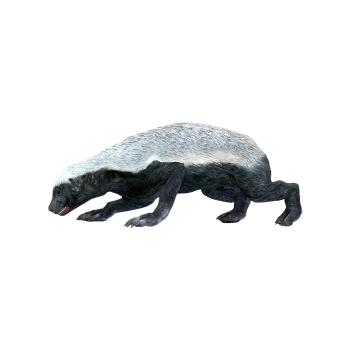
Honey Badger (3D animated model)
192 View
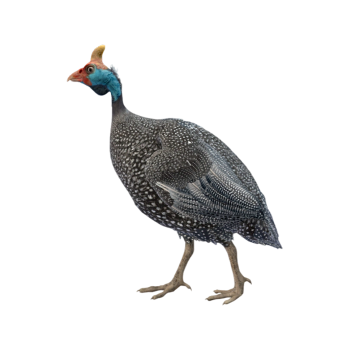
Guinea fowl (3D animated model)
163 View
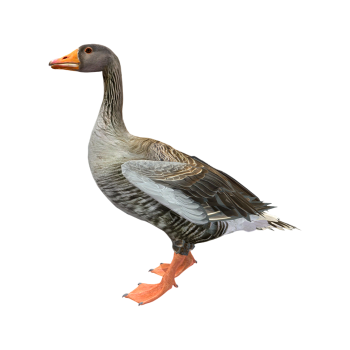
Wild Goose (3D animated model)
185 View
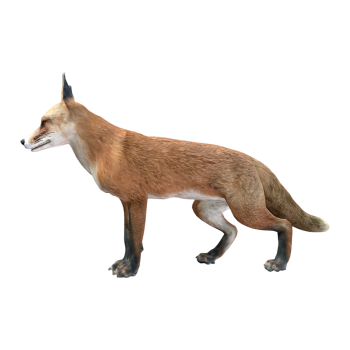
Red Fox (3D animated model)
153 View
Random Model
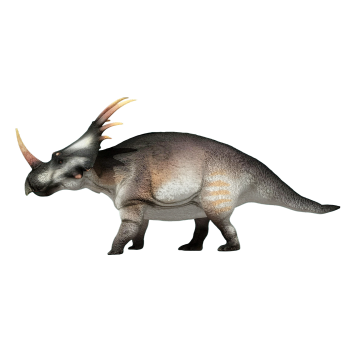
Halosaurus (3D animated model)
135 View
Guinea fowl (3D animated model)
163 View
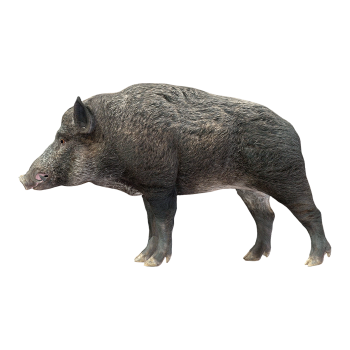
Wild Boar (3D animated model)
103 View
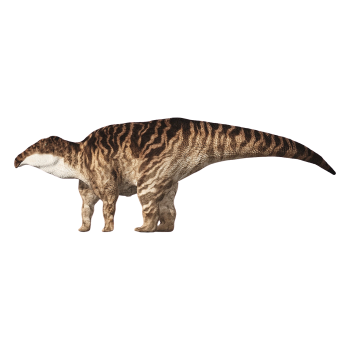
Shandong Dragon (3D animation model)
159 View
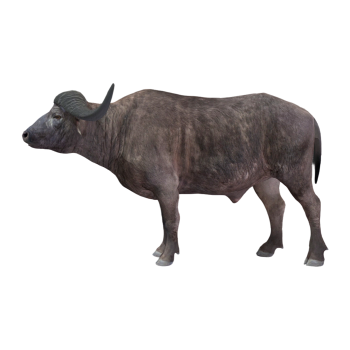
Buffalo (3D animated model)
181 View
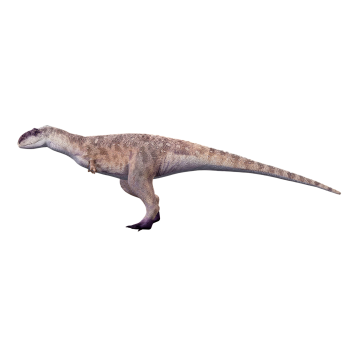
Red Fox (3D animated model)
153 View
Honey Badger (3D animated model)
192 View
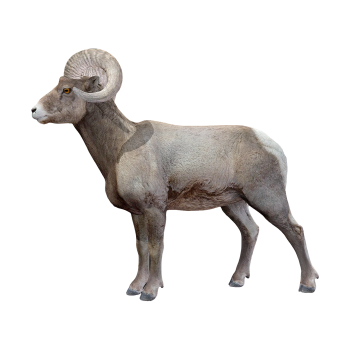
Canadian argali (3D animated model)
137 View